Let New York State Senators hear your voice! Create a nysenate.gov user profile and set custom alerts for issues you care about, comment and vote ‘yea’ or ‘nay’ on bills, and access live streaming and archived Senate videos.


Let New York State Senators hear your voice! Create a nysenate.gov user profile and set custom alerts for issues you care about, comment and vote ‘yea’ or ‘nay’ on bills, and access live streaming and archived Senate videos.

President Donald Trump made several telling remarks Sunday in an interview with the Financial Times, revealing some of his administration’s potential war plans as it relates to Iran.
“To be honest with you, my favorite thing is to take the oil in Iran but some stupid people back in the US say: ‘why are you doing that?’ But they’re stupid people,” Trump told the Financial Times, the outlet reported.
Trump told the outlet that his “preference” in his administration’s war against Iran would be for the United States to “take the oil," invoking a comparison to the U.S. takeover of Venezuela’s oil industry in January when the Trump administration halted Venezuelan oil shipments to the Cuban government, and started oil shipments to Israel “for the first time in years.”
Trump also spoke to the possibility of the U.S. military seizing Kharg Island, an Iranian island critical to the nation’s oil industry.
“Maybe we take Kharg Island, maybe we don’t. We have a lot of options,” Trump said, speaking with the Financial Times. “It would also mean we had to be [in Kharg Island] for a while. I don’t think they have any defense. We could take it very easily.”
Trump’s war against Iran has sent oil prices soaring as Iran continues to block U.S.-aligned vessels from accessing the Strait of Hormuz, a crucial shipping channel through which 20% of the world’s oil trade flows. Trump has reportedly been looking for a way out of the war, though one former Trump security advisor warned that such an off-ramp may no longer exist.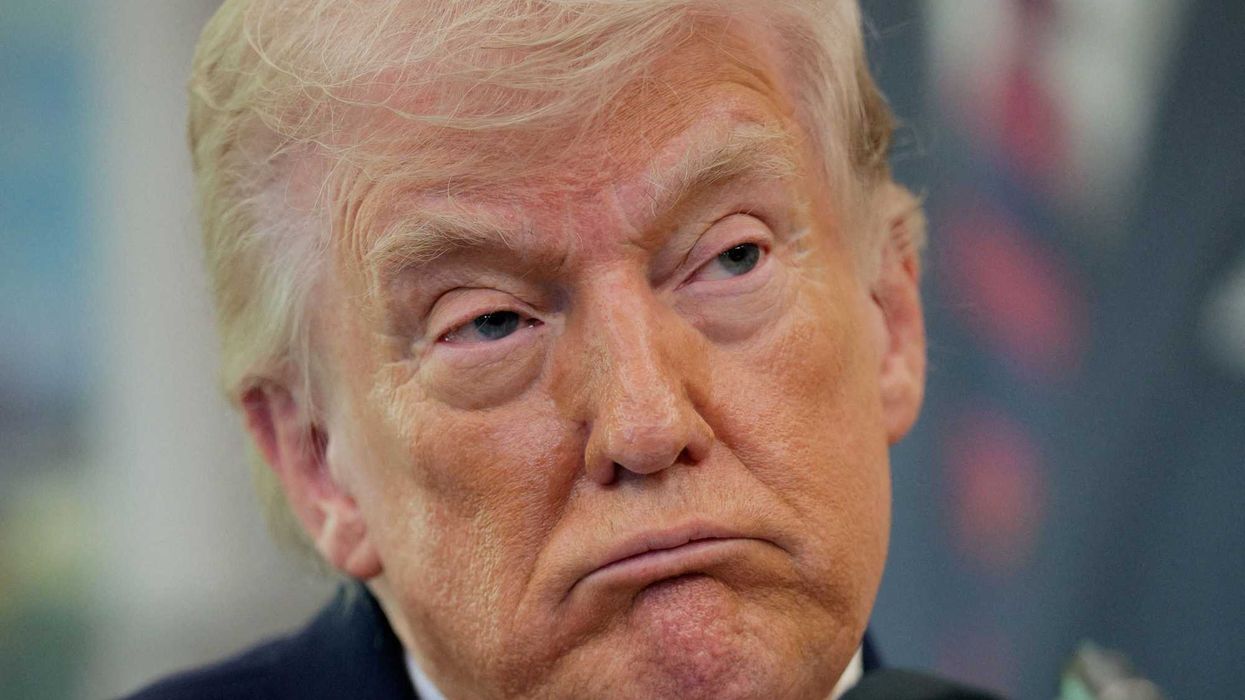
The Department of Housing and Urban Development has dramatically expanded its immigration enforcement activities, auditing thousands of housing applicants and proposing new rules that would force mixed-status families to choose between separating from undocumented relatives or losing rental assistance entirely.
HUD Secretary Scott Turner has instructed public housing authorities to verify immigration status for approximately 200,000 people receiving federal housing benefits, reported the Washington Post. The department is also sharing data with the Department of Homeland Security and has proposed a rule blocking mixed-status households — families containing both documented and undocumented members — from accessing housing programs altogether.
The policy would devastate eligible families. The Center on Budget and Policy Priorities estimates that nearly 80,000 people would lose housing assistance under the proposed rule, including 52,600 eligible citizens and 35,400 citizen children. Housing officials report that for every ineligible person removed from programs, approximately three eligible people lose assistance.
Public housing authorities have raised significant concerns about the implementation. HUD provided 3,000 housing agencies with lists of flagged tenants and demanded corrections within 30 days — a timeframe housing officials characterize as impossible. After investigation, local officials discovered the vast majority of flagged individuals were flagged in error due to data synchronization problems, duplicate entries, or administrative mistakes like missing initials or transposed Social Security numbers.
Mark Thiele, chief executive of the National Association of Housing and Redevelopment Officials, criticized the shift in mission.
“Putting that responsibility on them shifts immigration enforcement away from the agencies that are meant to handle it and actually puts eligible families at risk of losing their housing assistance,” Thiele said. “Housing agencies should focus on what they do best: providing homes for their communities. They should not be asked to act as immigration enforcers on top of that.”
Turner defended the policy as necessary to protect taxpayer funds and ensure benefits reach U.S. citizens. "Under President Trump's leadership, the days of illegal aliens, ineligibles, and fraudsters gaming the system and riding the coattails of American taxpayers are over," he stated.
Housing experts argue the policy won't address underlying housing shortages or lower costs. Of 4.4 million HUD-assisted households, only approximately 20,000 are mixed-status. The proposed changes represent part of a broader administration effort to use federal agencies for immigration enforcement, including similar initiatives at the Education Department, IRS, and banking sector.