UB hosts the Swimming and Diving MAC Championships February 26th – March 1st

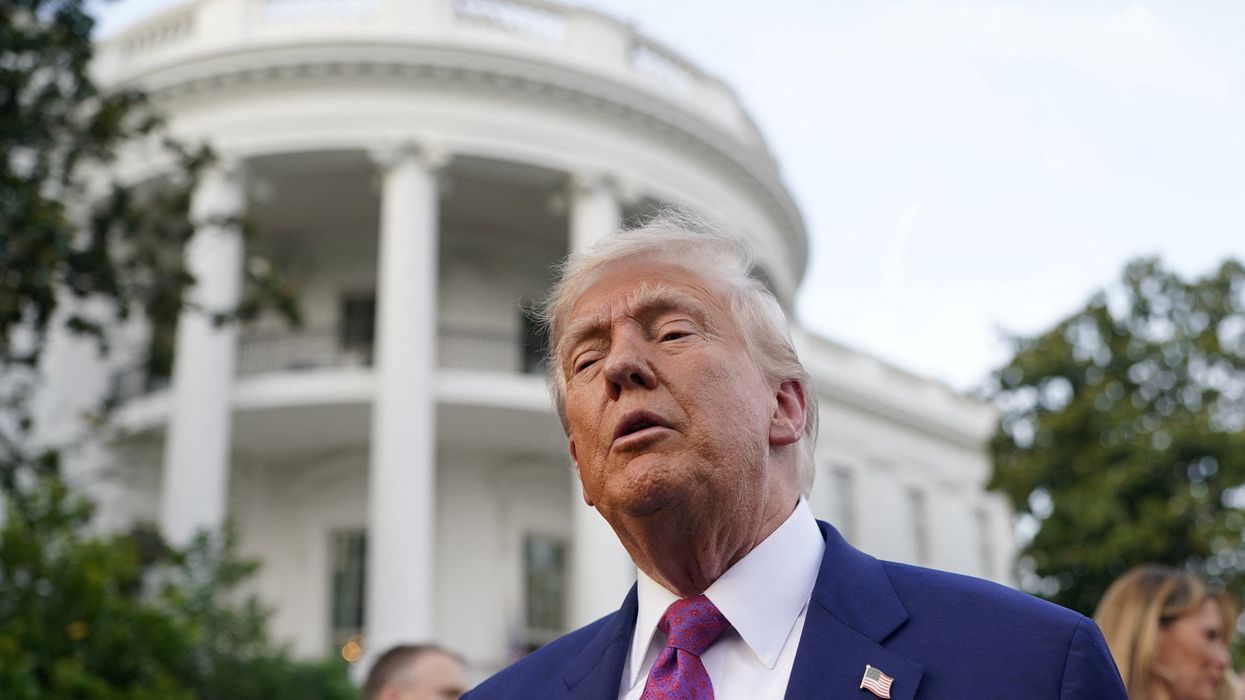
Donald Trump may have partly written the most recent White House East Wing court filing with his legal team, an analyst has claimed.
Trump has faced a series of legal challenges against his White House renovations, particularly a $400 million ballroom project and the refurbishing of the Eisenhower Building's exterior. A legal team working for Trump asked an appeals court yesterday (April 3) for an emergency ruling, which, if granted, would allow construction on the East Wing to continue.
The documents making the argument to the appeals court appear to have been partly written by the president himself, according to CBS News' Arden Farhi.
He wrote, "The opening pages of the court filing are loaded with exclamation points ('Time is of the essence!'), parenthetical asides, misplaced capital letters ('Almost 400 Million Dollars of private donations'), and multiple adjectives for emphasis ('shocking, unprecedented, and improper injunction') – all rhetorical flourishes of the president's online posts.
"One sentence runs 130 words and covers more than half a page. 'Private donors and American Patriots singlehandedly funded the 300 to 400 Million Dollar project (depending on finishes), which is on budget and ahead of schedule.
"'No taxpayer dollars are being used for the funding of this beautiful, desperately needed, and completely secure (for national security purposes) ballroom,' the filing reads."
It has not been confirmed whether Trump wrote any part of the recent legal filing. The administration has put in new fiscal requests for this year, which include hundreds of millions of dollars for the project.
The administration’s fiscal 2026 proposal includes more than $377 million “for repairs and renovations to the executive residence,” with another $174 million projected for 2027, according to budget documents reported by Politico.
An Office of Management and Budget spokesperson told Politico that the totals include not only work on the residence itself, but also security-related costs, adding the funding is for “a number of renovations, not just the executive residence.” The budget does not specify which projects the money would fund, Politico noted Friday.
President Donald Trump's executive order demanding states put new procedures in place for mail-in voting and turn over information about who is voting by mail is almost certain to be struck down in court, Jim Saksa wrote for Democracy Docket on Friday — but that's not the only way it could derail Trump's ambitions.
That's because this order could also undermine one of the main arguments Trump's Justice Department has used in court to defend the lawsuits filed against dozens of states to seize their voting rolls.
"In those lawsuits, the DOJ has claimed it needs millions of voters’ private sensitive data in order to ensure the states are complying with federal laws that require states to take steps to ensure accurate rolls," said the report. "But outside of court, DOJ officials like Assistant Attorney General Harmeet Dhillon have undermined that claim by boasting that the state voter records they’ve already obtained have been used to verify citizenship status using the Department of Homeland Security’s (DHS) Systematic Alien Verification for Entitlements (SAVE) program."
After judges began ruling against the lawsuits on these grounds, DOJ officials backpedaled somewhat and said there was no plan to help the Department of Homeland Security build a national database of voters.
Trump, however, may have blown that excuse by outright acknowledging in his executive order that he "directs DHS to create a nationwide voter registration database," noted the report.
"Along with Dhillon’s statements and Trump’s orders, the DOJ’s courtroom attestations have been impeached repeatedly," wrote Saksa. For example, "last week, CBS reported that DOJ and DHS were working to formalize a data-sharing agreement for the voter rolls. And on the same day Tucker was assuring a federal judge that the DOJ wouldn’t share state records with DHS, Eric Neff, acting chief of the DOJ’s Voting Rights Section, admitted to another judge in Rhode Island that they, in fact, would."
Trump's lawsuits for state voting data are not just limited to Democratic-controlled states, but even some Republican-controlled states where GOP election officials have concluded sharing the data would be illegal. Some of these lawsuits have run into legal blunders, including the revelation that there was no proof the suit against Washington State was properly served.