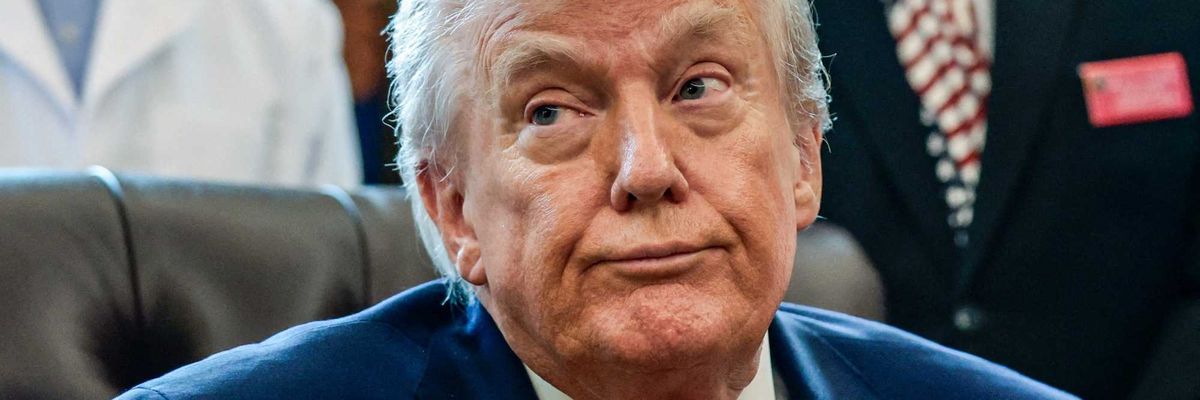

Michigan Wolverines star Vladislav Goldin, who is from Russia. | Matthew Stockman/Getty Images
Vox reader Brian Diederich asks: Why and how do so many collegiate basketball teams — both men’s and women’s — now have so many international student-athletes?
If you’ve turned on March Madness this year, you’ve witnessed the most international players ever in college basketball’s signature competition.
Across both the men’s and women’s brackets, 264 athletes — 15 percent of all NCAA players in the tournaments — hailed from outside of the US. They are a cross-section of humanity, representing 45 countries in the women’s tournament and 52 in the men’s.
The number of overall international college basketball players more than doubled from 2010 to 2025. It is a trend across sports: 25,000 of all US college athletes were born in another country.
Forty years ago, US schools put little thought into recruiting players from Africa or Europe. A handful of players started to come to the US to play college ball in the 1980s, as the NBA was becoming more popular and thinking more globally. But international players were almost exclusively identified by word of mouth, recommendations from a friend of a friend. Sometimes, the US coaches wouldn’t even see any game tape before signing a player to a scholarship; in 1984, Dutch player Rik Smits got a scholarship offer from Marist University based on nothing but his height (7’4”); he says the coach never even saw him play.
But today, the NBA and NCAA have built out an international pipeline for players, while the internet has made it easier than ever to scout from abroad. A lot has changed.
What has driven more international recruitment in college basketball?
NBA legend Hakeem Olajuwon, who came to the US in 1980 to play NCAA basketball, is a pivotal figure in this evolution. Then a relatively unknown Nigerian teenager, he was offered a chance to try out for the University of Houston’s team because a coach had heard from an acquaintance that Olajuwon was a promising prospect. After his star college career and a successful transition to the pros, Olajuwon had set the blueprint.
Olajuwon became one of the NBA’s best players in the ’80s and ’90s, winning an NBA MVP and two championships. His rise was paralleled by Jamaica’s Patrick Ewing, who moved from Kingston to play high school basketball in the US before attending Georgetown and then going on to make the New York Knicks one of the consistently best in the league. Smits played for 12 seasons and made one All-Star team.
Their success, and the next generation of players who followed, pushed the NBA — and, with it, college basketball — on the path to globalization. By the turn of the century, even elite prep schools were starting to recruit international players.
A recruiting arms race got underway in the ’80s and ’90s, and then an NCAA rule change in 2010 made it easier for more international players to come to the US.
Basketball is typically one of the most popular and most profitable athletic programs that a university will have, second only to football if the school has a football team — and for some schools, like Duke, basketball still maintains primacy. The pressure to compete is intense. If you’re at the University of North Carolina and you see your top rival, the Blue Devils, recruiting abroad, you are going to start doing the same thing. International recruitment went from happenstance in the ’80s to an indispensable recruitment tactic that teams across the NCAA used to keep up.
In 2001, the NBA and NCAA doubled down on the strategy and set up a formal pipeline, the Basketball Without Borders program, to get promising international players in front of American scouts. The NBA has more recently set up academic training camps that teach basketball skills while also offering more general education classes to prepare participants for a US college experience.
The program proved to be a success. One of Basketball Without Borders’s graduates is Joel Embiid, a Cameroonian player who came to basketball as a teenager, played as a Kansas Jayhawk, and won an MVP at the professional level in 2023.
Technology helped revolutionize basketball recruiting. In 1984, Rik Smits’s Marist coach had to hope that somebody had recorded Smits playing on some grainy VHS tape and then physically get his hands on that tape. Without that, he had nothing to go on but height. Today, player highlights from all over the world are uploaded to YouTube — where American coaches can view them easily at any time, and players can even build hype on social media to get attention from recruiters.
Those recruiters are offering players not only the chance to come to the US for an education — they’re also offering a financial opportunity.
How has money in college sports affected international recruitment?
Money is changing everything about what it means to be a college athlete — including for international players.
An opportunity to make money for themselves — and not just for the schools — is steering even more foreign basketballers to US colleges. NCAA athletes can now earn money through endorsements and other activities thanks to the Name, Image, and Likeness (NIL) rule that took effect in 2021.
In the ’90s and early 2000s, as international recruitment was spreading, playing college basketball wasn’t necessarily the smart move for the most elite foreign players. They could instead play in the expanding overseas professional leagues, earn a salary, and then enter the NBA draft without ever attending a US school. And that path was well trod: Luka Dončić, the subject of a media frenzy after his trade to the Los Angeles Lakers, played in the EuroLeague and leapt to the NBA in 2018 — three years before the NIL provision took effect.
But today, you can make real money playing college basketball in America and earn a salary that rivals those of foreign professional leagues. International players do have to jump through some extra hoops, as students on an immigration visa earning money raises legal questions, but athletes and their sponsoring institutions are quickly becoming savvy about how to navigate that issue.
The potential to make money while in school might even convince some players to stay in the college game longer instead of jumping to the NBA as quickly as possible.
Michigan center Vladislav Goldin, who was born in Russia, helped lead the Wolverines to their Sweet 16 berth last weekend, but he almost wasn’t there at all: He’d declared for the NBA draft in spring 2024, but changed his mind and transferred from Florida International University to the U of M, a more prestigious program with more earning opportunities.
A decade or two ago, that would have been unthinkable. But the business of college basketball has changed — and so have the players.
This story was also featured in the Explain It to Me newsletter. Sign up here. For more from Explain It to Me, check out the podcast.